Latest News
Interview with Kurt Hickson
Kurt Hickson, Lorsen Camps and Sophy King were selected for a Commission Award as part of Worcester OPEN 2023, Climate Change Edition, in celebration of the launch of Meadow Arts current exhibition Watermark, a contemporary art exhibition exploring water, flooding and the climate crisis across venues in Worcester until 3 June 2023.
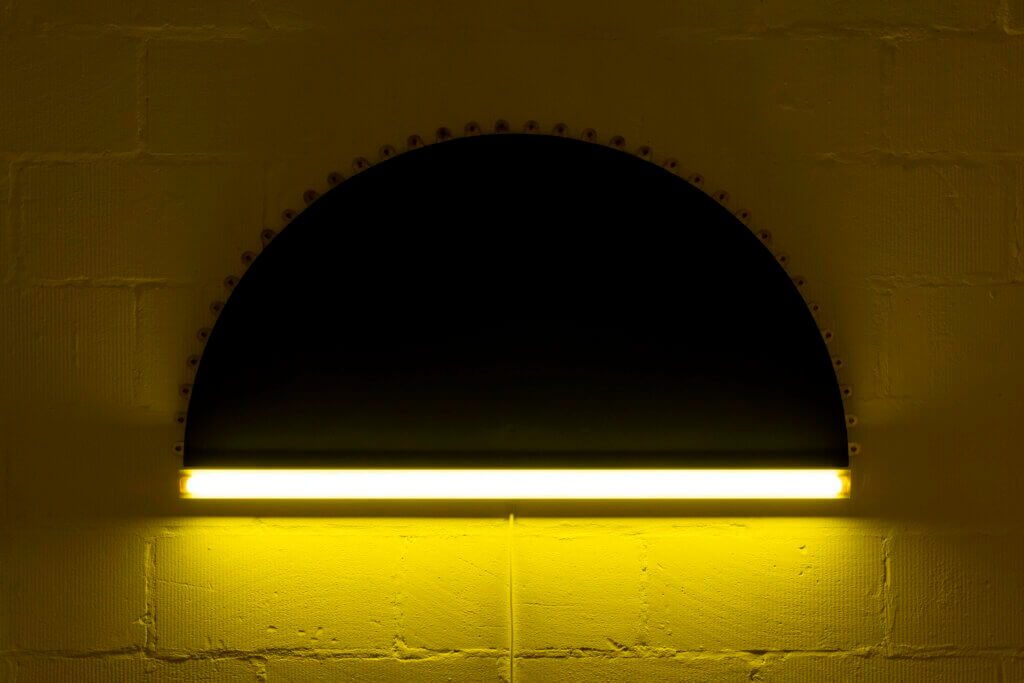
This week we’ll be focusing on Birmingham based artist Kurt Hickson and his winning piece, Black Sun on The Horizon (2020), currently on display until 30 April 2023 at The Art House, Worcester WR1 3HN.
Worcester OPEN 2023 was a collaboration between PITT Studio, Meadow Arts, The Art House and the University of Worcester School of Arts.
The exhibiting artists were selected by, Anne de Charmant (Artistic Director, Meadow Arts), Hilary Jack (Artist), Pippa Galpin (Artist and Senior Lecturer, University of Worcester), Emalee Beddoes (Independent Curator) and Chloe Roehead-Hughes (Gallery Assistant, PITT Studio).
I was lucky enough to win one of three Meadow Arts Commission Awards for the Worcester OPEN 2023: Climate Change Edition, with my work Black Sun on The Horizon (2020)
Kurt Hickson
You can learn more about Kurt Hickson’s work Black Sun on The Horizon (2020) in this blog post and watch him give a brief introduction to his practice in the video below.
I’m a mixed media artist based in Birmingham. My practice combines experimental DIY methods of production with the vocabulary of painting. I generally make works that sit somewhere between painting and sculpture, wall reliefs that have a design, almost architectural element to them. My work tends to play with notions around abstraction, representation and the actual physical object/material itself. To some extent I’m remixing ‘ready-made’ effects and clichés in art, which adds a retro feel to the work.
Black Sun on The Horizon was made during lockdown in 2020. A sequel to an earlier work Black Sun (2018), it combines elements from this as well as several other previous paintings, and nods to Ukrainian Suprematist artist Kazimir Malevich as well as American Minimalist Dan Flavin. Painted in matt black acrylic on canvas, it’s fixed in place by multiple mirror plates which replicate the corona (crown) of the sun. The work is completed with a horizon line in the form of a yellow filtered strip light. Despite its basic form, the artwork is representational in nature and so differs from Malevich’s concept of pure abstraction. Ironically a total solar eclipse in 1914 that was visible from Russia, Ukraine and Belarus inspired many Soviet artists, including Malevich, bringing ideas of moving away from natural forms and into pure abstraction full circle.
When I made the work several months into the global emergency, the initial mood of good will, of supporting one another and pulling together seemed to be over, and a dark cloud had formed. Not only were we coming to terms with the serious implications of Covid-19 moving forward, but also multiple other issues that the pandemic had seemingly exacerbated. From division, hostility and major world conflicts to recession, rising fuel, food and energy costs. From increasing global temperatures and warmer, rising oceans to the threat of another, more deadly pandemic; the black semi circle came to represent something on the horizon, an imminent man-made apocalypse of sorts.
The sun has always been an interesting, somewhat contradictory emblem to me. It alters our mood and perception of the world. It gives us energy, warmth, and light. It also has the power to kill us. Black Sun on The Horizon plays with ancient notions of the sun as a symbol of existence and harmony; the sunrise as a renewal of life and rebirth. Whilst its absence in the sky after sunset or during a solar eclipse represents something dark and destructive; becoming a symbol of death and the end of the world. In a more scientific era, the power of the sun can be seen in full effect in relation to the breakdown of the ozone layer and climate change. Black Sun on The Horizon points to this destructive power, utilising light and dark to create a sense of foreboding, and a feeling of unease.
Throughout history, humanity has faced disaster, with each generation confronting what they see as the impending apocalypse. War, disease, famine, natural disasters, the threat of nuclear Armageddon; people, time and time again, have faced adversity on biblical proportions. However, over thousands of years, humankind has found a way to overcome each major crisis, averting judgement day or at least postponing it. Climate change is perhaps no different. Although Black Sun on The Horizon was initially made as a representation of the sun setting on humanity, it could on the other hand, be seen as the sun rising, a depiction of the big circle in the sky as that ancient symbol of hope and rebirth.
More from Meadow Arts

OttM Diary entry: Learning to Make the Work
By Andy J Harper We are delighted to be part of Ode to the Midlands (OttM), a major…
BorderLands Walking Series: Hergest Ridge with Caroline Allen
On 13 September, artist-curator Caroline Allen led a walk around Hergest Ridge, for our BorderLands Walking Series. Her…
Five Minutes With: Grace Emily Manning on The Golden Valley Sundial Project
In our short series Five Minutes With, we’ve been shining a light on the people who help bring Meadow…
Learning Through Play: Riverside School and The Golden Valley Sundial
There is something special about seeing an artwork come alive through play. We loved seeing the Riverside School…

Golden Valley Molecules at No.1 Station Approach
Earlier this year, Meadow Arts installed a new public artwork by artist Cordelia Cembrowicz in the heart of…

New International Residency Exchange Partnership
Meadow Arts is thrilled to announce a new international partnership with CVAN England, CVAN West Midland with BBK Bayern…