Latest News
Five Minutes With: Meadow Arts Commissioned Artist Maya Rose Edwards
In our new short series Five Minutes With, we’ve been shining a light on the people who help bring Meadow Arts’ vision to life. From dedicated team members to our brilliant board members, trustees and the artists who we commission, we’re taking a closer look at the individuals who make everything we do possible.
In this episode of Five Minutes With, we’re finding out more about Meadow Arts’ BorderLands artist in residence, Maya Rose Edwards as they continue to work with communities along the Welsh-Marches Border, questioning the idea of borders.
Maya Rose Edwards is a visual artist working across various media through research-based collaborations, site specific intervention, live art, sculpture and participatory encounters. Since graduating from The Glasgow School of Art in 2021, they have developed a reputation for producing ambitious public artworks that focus on the politics of place, rural culture, acts of landmarking, and queer ecologies. They are drawn to rural culture and its ability to engage communities with their landscapes.
Maya has been selected by Meadow Arts as the commissioned artist for Year 1 of our new project BorderLands, a 3-year, place-based project very much rooted in our region of the Welsh-Marches Border Country. The programme will challenge the idea of fixed borders dividing territory and communities, and instead, suggest that borders might be read as more mutable and that the territory they create can be places of connections, distinctiveness and exchange. Through contemporary visual art, the project invites communities to reflect on how they experience and interpret borders in their own lives and globally.
Maya will undertake three residencies during Autumn 2025, delivering participatory workshops and creative activities in the towns of Hay on Wye, Kington and Presteigne – leading to a new public commission shaped by collective imagination.
“I’m drawn to rural places because they offer a kind of spaciousness, both physically and socially, that allows for deeper forms of engagement.”
Maya Rose Edwards
Clare: For an early career artist, your work is prolific: you have already exhibited in over 20 locations across the UK, including installing ‘Kissing Gate’ near Liverpool Street Station for Sculpture in the City, in London. Can you tell us more about the inspiration behind your work?
Maya: For me, inspiration is absolutely everywhere. I’m fiercely curious about everyday encounters; the way people move through places, the histories we inherit, and the quiet poetics of in the spaces between. I often describe myself as a magpie collector of stories, materials, and objects, which form a kind of living (and physical) archive. These fragments help me trace connections between people and landscapes, and how each leaves its mark on the other – and that’s a major source of inspiration.
I’m not interested in boxing myself into one type of work; my practice is constantly evolving, because inspiration can be an unpredictable force. What does remain consistent is my fascination with the politics of place and how meaning is embedded in the land. I like to create a kind of theatre with objects and with place, to bring forward the untold stories that sit beneath the surface of the everyday. For me, art is an act of listening and translation, transforming objects and fragments of experience into something shared and resonant.
Clare: You have just won a Henry Moore Foundation, Artist Award 2025, you are developing a public artwork to mark the Highland Boundary Fault in collaboration with Cove Park, in Scotland, and you are working with us! Do you feel that you have boundless creative energy presently?
Maya: I’d say I’m a self-confessed workaholic, but one who’s learning how to manage the burn! I genuinely live and breathe what I do and it’s a privilege to support myself through making art, and also something I never imagined would be possible. That sense of gratitude is what drives me to give each project everything I have, body and soul, because you never know when this crazy world might just spit you out again. I’m here for the ride.
But my creative energy isn’t infinite. I’ve learned that to sustain it, I have to step back. I retreat often into remote places, anywhere I can disappear and try to look at nothing for a while. That space to reset my lens is crucial; without it, I lose perspective. I’ve also realised that collaboration fuels me as much as solitude. I rely on others as mirrors and enthusiastic co-conspirators. Their feedback, energy, and insight feed my own momentum. So no, not boundless energy, but a carefully balanced triangle. I’m still pinching myself every day.
Clare: The project in Scotland, and here in the Welsh borders are very rurally based and inspired by landscape; two features that echo our own interests. What is it that draws you to working in rural places?
Maya: I’m drawn to rural places because they offer a kind of spaciousness, both physically and socially, that allows for deeper forms of engagement. There’s a tangible connection between people and the land; a shared understanding that things take time and that creativity grows through care and reciprocity. In rural communities, there’s also a strong culture of mutual support and non-monetary exchange, people show up for one another, and that energy seeps into the work. I also grew up in the countryside of North Yorkshire so the culture of rurality feels like home.
Access to landscape and open space is, of course, a huge part of it. Working outdoors, you’re constantly reminded of your scale in relation to the world. The land holds its own kind of intelligence, and I like to try and tune into that through the work to make something that feels like a conversation rather than an imposition. The social ecosystems in the outskirts are vibrant; rural communities know how to get things done. Whether I need a digger or a drill bit or a barn to store some timber, you can almost guarantee that will be possible, which makes my job a lot easier!
Clare: Your website includes so many diverse, participatory projects. Can you tell us about your process, how you come to find your inspiration, and some of the highlight projects to date? And do you prefer collaborations to solo work?
Maya: I believe people are more disconnected from the innate power of their own creativity now than at any other point in history, and that loss plays a big part in where we find ourselves today. We’ve forgotten that creativity is a shared language, something that helps us understand one another beyond the capacity of language. I think artists have a responsibility to use their skills to help rebuild those connections in the places and communities they live and work.
That’s why I love working with people. Facilitation is probably my main medium, even more than sculpture. I like choreographing creative encounters that encourage collective imagination. I’m always ambitious with ideas, but I know I can’t do everything myself — working with non-art experts is one of the greatest privileges of my practice. When a community, myself, and a landscape make something happen together, that’s the work.
That said, keeping a solo sculptural and object-oriented practice keeps me loose — it’s a crucial part of the work to keep that muscle well limbered.
Clare: Finally, as a relatively recent graduate, what top three tips would you offer aspiring young contemporary visual artists?
Maya: Firstly, try to overcome imposter syndrome and the urge to compare yourself to others. Everyone is shaped by different backgrounds, opportunities, and invisible circumstances, so there’s no single path or timeline. That said, shy bairns get nowt, if you don’t ask, you don’t get. Don’t worry about being bold if you have to be.
Secondly, don’t feel pressured to constantly make stuff. Trust that your individual lens is what makes you an artist. That’s something you carry with you, even when you’re not making and nobody can take that away from you (even late-night hospitality shifts). Keep a notebook in your bag, even if it only opens once in a blue moon and try to remember to look through that lens when you can.
Lastly, do the work to demystify this world. Talk about what you care about and what you’re working on with anyone who’ll listen: your family, people in the shops, your neighbours. Learning to talk about your work in a way that is accessible to people is crucial. You’re no longer in a crit. The most inspiring people aren’t always in studios; they’re often hiding in plain sight. Sharing your practice openly invites those connections in return.
BorderLands in 2025-26 is part-funded by the UK Government through the UK Shared Prosperity Fund (UKSPF). The UK Shared Prosperity Fund aims to improve pride in place and increase life chances across the UK investing in communities and place, supporting local business, and people and skills.

More from Meadow Arts

OttM Diary entry: Learning to Make the Work
By Andy J Harper We are delighted to be part of Ode to the Midlands (OttM), a major…
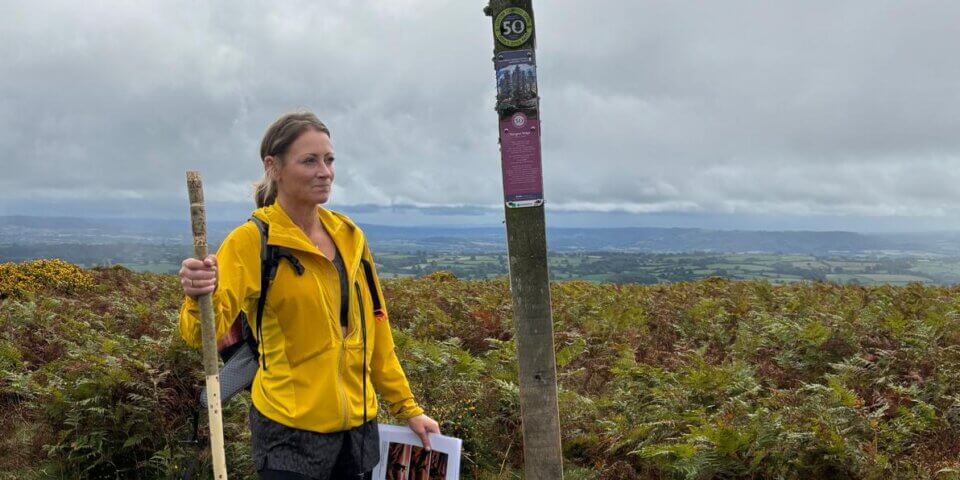
BorderLands Walking Series: Hergest Ridge with Caroline Allen
On 13 September, artist-curator Caroline Allen led a walk around Hergest Ridge, for our BorderLands Walking Series. Her…
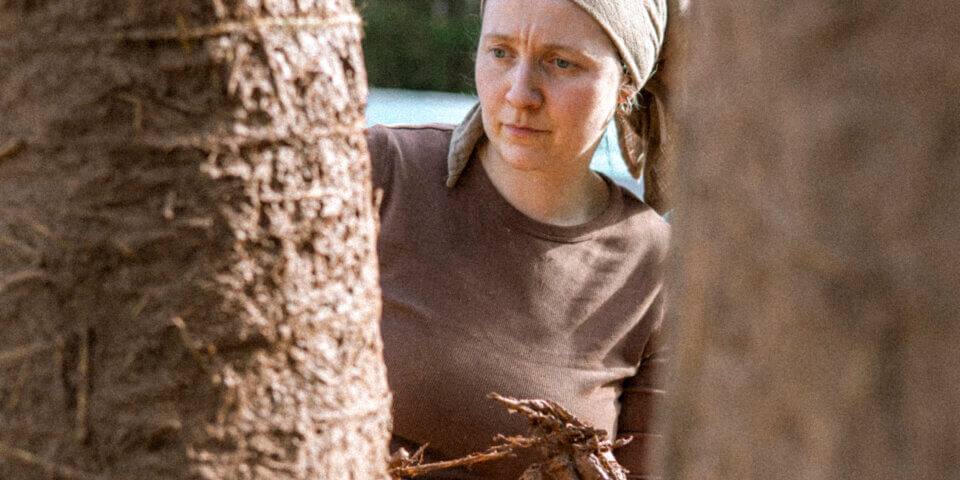
Five Minutes With: Grace Emily Manning on The Golden Valley Sundial Project
In our short series Five Minutes With, we’ve been shining a light on the people who help bring Meadow…
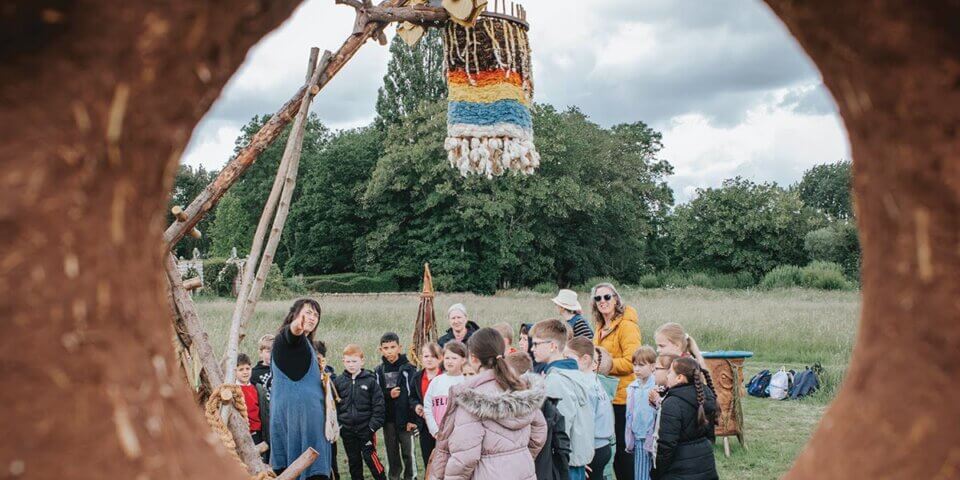
Learning Through Play: Riverside School and The Golden Valley Sundial
There is something special about seeing an artwork come alive through play. We loved seeing the Riverside School…

Golden Valley Molecules at No.1 Station Approach
Earlier this year, Meadow Arts installed a new public artwork by artist Cordelia Cembrowicz in the heart of…

New International Residency Exchange Partnership
Meadow Arts is thrilled to announce a new international partnership with CVAN England, CVAN West Midland with BBK Bayern…