Latest News
Five Minutes With: Meadow Arts Commissioned Artist Leah Gordon
In our new short series Five Minutes With, we’ve been shining a light on the people who help bring Meadow Arts’ vision to life. From dedicated team members to our brilliant board members, trustees and the artists who we commission, we’re taking a closer look at the individuals who make everything we do possible.
In this episode of Five Minutes With, we’re finding out more about commissioned artist Leah Gordon, ahead of their solo exhibition Monument to the Vanquished Peasant, opening this autumn at the Herbert Art Gallery & Museum, in partnership with Coventry Biennial 2025.
Leah Gordon is an artist, curator and writer whose work explores the interlinked histories of the Caribbean plantation system, the Enclosure Acts, and the creation of the British working-class. Often amplifying ‘histories from below’, her work recognises the role of carnival, folk traditions and grassroots actions in both performing and sustaining radical histories.
Her film and photographic work has been exhibited internationally, she is the co-director of the Ghetto Biennale in Port-au-Prince, Haiti, and in 2022 she produced an award-winning feature documentary Kanaval: A People’s History of Haiti, which was screened in cinemas and on BBC 4’s Arena. In 2023 her works were acquired by the Kadist Collection and the Royal Museums Greenwich, and in 2024 she exhibited in group shows at Museum Van Loon in Amsterdam, UMOCA, Salt Lake City and Musée du quai Branly, Paris.
Leah has been working with Meadow Arts since 2021 and the culmination of this project, called Monument to the Vanquished Peasant, is a new exhibition at the Herbert Museum & Art Gallery as part of the Coventry Biennial. The exhibition is accompanied by a book, Common People, co-authored with digital images collector and writer Stephen Ellcock.
I wanted to ask the question why we have no monuments to the enclosures, which was, for the majority of the English people, one of the most brutal and life-changing events in English history.
Leah Gordon
Clare: Can you tell us more about Monument to the Vanquished Peasant, how you worked over these last years?
Leah: When I began work on this project, it was the culmination of conceptual and thematic preoccupations that stretched back for almost thirty-five years. This is a point on a trajectory from the feminist folk punk band that I wrote lyrics and sang for in the mid-eighties; to my enduring regard for and image-making of British folk traditions; to my respect for histories from below, as lauded by E.P Thomson, recorded by Studs Terkel and told by Marcus Rediker; my film, book and exhibitions on Haitian carnival as well as my Channel 4 documentary about Haitian peasants, their pigs and US imperialism; and as an expression of my class politics.
I wanted to ask the question why we have no monuments to the enclosures, which was, for the majority of the English people, one of the most brutal and life-changing events in English history. I was questioning why we have memorialised our role in the Slave Trade but not the enclosures? Could it be that it is more politically expedient to memorialise our nation’s brutality to other races and nations, rather than to admit what has been done to our own people by the ruling class of Britain?
More profoundly this story has greater meaning for me because my grandfather, Jesse Walker, was a farm labourer who was divorced from the land surrounding Ellesmere Port when it was compulsorily purchased in 1948 to build the oil refinery Shell Stanlow, where he and many others from my extended family, including my father, were finally employed. But it does please me that he continued to poach with ferrets until his death!
Clare: You often work with collaborators, for example Stephen Ellcock, how to you know him and how does his work fit into the project?
Leah: I met renowned image-collector and author, Stephen Ellcock, as he published a selection of my portraits of commoners in his beautiful book, England On Fire, published in 2022 and later my Burryman portrait in Elements, published in 2024. He is an amazingly erudite and informed speaker, so I went to many of his subsequent talks and got to know him. Our constellations of interests and areas of research intertwined so I do not even know at what point we decided to work together on the book and for him to contribute to the exhibition, but it did seem like a natural progress. Stephen brings a vast knowledge of archival art collections from around the world into which he sourced material which was a deep dive into the psyche of British rural life as portrayed by artists over the centuries. These were including images by William Blake, Samuel Palmer, Thomas Gainsborough, George Stubbs, John Constable, George Walker and many more. These works compliment my contemporary work by questioning the often invisibility, or at least the opacity, of the loss of the commons in British landscape traditions. But also, they explore the representation of peasants and their folk traditions in the rural setting. They are presented in print form in the book and for the exhibition in a film that Stephen directed and I edited.
Clare: It’s interesting that the themes of Monument to the Vanquished Peasant are often thought of as rural issues, but in fact, they relate to all of society and our social history. What are your thoughts on the common misconception of a rural-urban divide?
Leah: All urban dwellers have a rural ancestry and the countryside and our relationship to it is in our DNA. I think we probably all carry unacknowledged pain from the brutal ways that the majority classes have been divorced from the land over the decades in this country. The English peasantry suffered some of the earliest and most brutal land enclosures in Europe and the world.
The modern British working class has its roots amongst the peasants driven off the land, but the history of enclosure hasn’t been treated as a significant part of a national discourse of history and has never been memorialised anywhere in Britain. I hope this project will address these historical silences and imbalances. This is especially relevant considering the new attacks upon British public land, which is being rapidly sold off, as our freedoms of movement are being eroded, and as we are increasingly aware that the majority, rather than an elite minority, need to have more voice in the future of our environment.
At the heart of this project is a conviction that an understanding of the process and history of British enclosure is essential to a critical understanding of the global systems, processes and politics of dispossession and extraction that we are witnessing now all around the world. During a period of increasing nationalism and fascism it is also important to explore ways of popularising internationalism with global stories, such as the five thousand Gujarat farmers who petitioned their government for the permission to commit suicide as they were losing their access to land, and other contemporary stories of indigenous groups from the Amazon losing land to loggers and the hardship created by lithium mining in the Congo. It is not enough to reclaim and reassert a silenced British history but to simultaneously highlight contemporary landgrabs and to draw parallels with indignities and hardships of the British peasant.
Clare: You’ve had an exciting and varied artistic career, working across many counties and with different cultures. What are some of the standout highlights for you?
Leah: My highlight was my relationship with Haiti. I first visited Haiti in 1991 and I have been questioning what keeps taking me back there ever since. And it is history that binds me to Haiti. Whilst in most countries’ history has been replaced by consumerism, media or terrorist spectacle it is still a potent force in Haiti. And it’s not just a case of what a History Haiti has had, although that has been pretty stellar in global terms with the Slaves’ Revolt alone. But for me it is also a case of how Haiti reveals its history.
Haitian majority class culture is a potent vessel for this history, continually transmitting, telling, retelling and reinterpreting Haitian history. School fees are excessive for the majority of the Haitian people, and education standards poor, but you will be hard pushed to find a Haitian who doesn’t know the vast and intimate details of their own history.
Also aesthetics, creativity and performance have a social value in the daily life of the Haitian people. If you walk along any street in Haiti with a majority class Haitian artist you will quickly notice a phenomenon that would be rare in most other countries. People will greet him or her using ‘Atis’ as a professional title before their name. In Haiti, Artist is a term of respect equal to Doctor or Agronomist. These are titles that register professions that are both honourable and important for the life of the nation. Whilst the Agronomist tends to the land and the Doctor to the body, the Artist feeds the soul. ‘Pep La’ do not consider Haitian art as another cheap local export to a foreign land that holds no internal significance, but as something far more necessary and pregnant with possibilities.
Clare: Finally, as a visual artist, exploring often complex issues, can you tell us about your process, how you come to find and research your topics?
Leah: The subject matter of my projects come to me. Many at a time and I allow a kind of mental Darwinism to naturally select which will survive in my often turbulent and crowded mind. The first thing to do is find books…not just non-fiction but also fiction and read a lot. I am currently researching for a project about perfumes and have decided that I want a tree as a narrator so a friend introduced me to the novel, ‘The Island of Missing Trees’ by Elif Shafak, set in Cyprus, where the voice of the fig tree is a central character, which has been a touchstone. I can cite a host of novels, as well as history books, that have been beacons throughout my research for the Monument to the Vanquished Peasant, including the novels Harvest by Jim Crace, Shirley by Charlotte Bronte, Precious Bane by Mary Webb and Clear by Carys Davies and Caliban and the Witch by Silvia Federici, The Many-Headed Hydra by Peter Linebaugh and Marcus Rediker and Kill All the Gentlemen by Martin Empson amongst many. Finally and more practically I researched this with Annabel Edwards, who lives in Shropshire, so we worked out how to identify remaining common land and reach out to the folk that still have rights. Many have remained friends.
These questions have felt quite conceptual, but I think it is important to note that I only use analogue film and a variety of vintage cameras from Roleiflex to Leicas to large format Tachihara. I shoot on black and white negative and colour slide film and depend on the few photographic labs that keep processing the film and keep their machinery, which is as old as my cameras, working. Hats off to them all…especially ECONE, Genesis, Bayeux and Metro.
Finally my friendships with Annabel Edwards and Marg Duston have been integral to this project. Annabel and I worked together years ago when she was writing about book about New Age travellers. We hit if off immediately then and our friendship has endured and grown throughout the years. Annabel is an accomplished writer and a brilliant researcher, usually having googled something before I have finished my sentence on the phone! In her work on this project she has amassed a massive knowledge of the history of enclosure and land struggles, and this project would have been impossible without her collaboration. Marg and I met on a film set in East London where she worked as an art director. Marg is one of the most skilled and sensitive artists I have met. She has all the most incredible artistic skills in her fingertips…skills that I could only dream of…and she is generous enough to share them with me on this, and many earlier, projects bringing a respite from purely representative photography through the hand-tinting, drawing and painting. I will be forever in debt to them both!
More from Meadow Arts
Five Minutes With: Grace Emily Manning on The Golden Valley Sundial Project
In our short series Five Minutes With, we’ve been shining a light on the people who help bring Meadow…
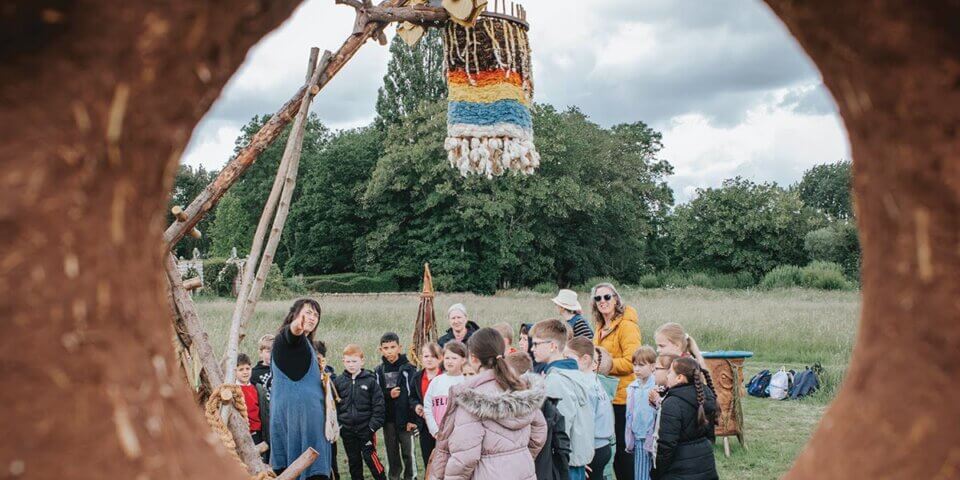
Learning Through Play: Riverside School and The Golden Valley Sundial
There is something special about seeing an artwork come alive through play. We loved seeing the Riverside School…

Golden Valley Molecules at No.1 Station Approach
Earlier this year, Meadow Arts installed a new public artwork by artist Cordelia Cembrowicz in the heart of…

New International Residency Exchange Partnership
Meadow Arts is thrilled to announce a new international partnership with CVAN England, CVAN West Midland with BBK Bayern…
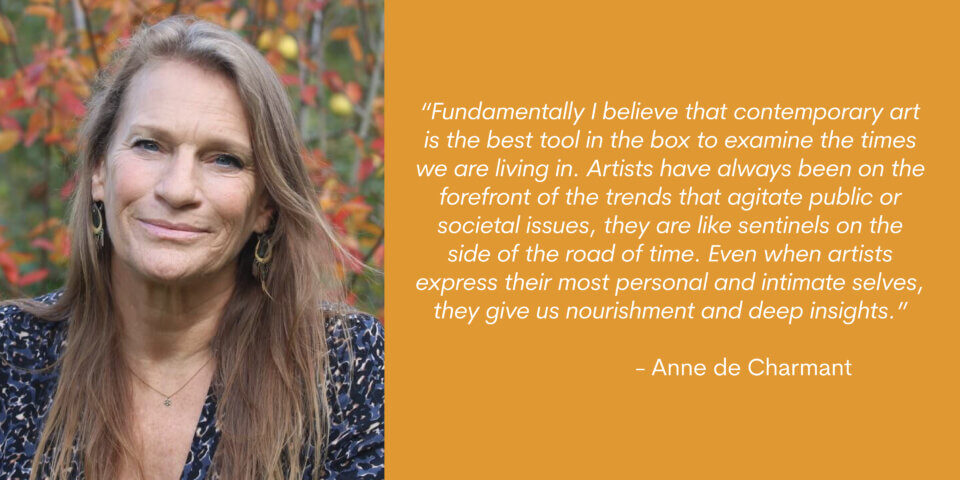
Five Minutes With: Anne de Charmant
In our short series Five Minutes With, we’ve been shining a light on the people who help bring Meadow…
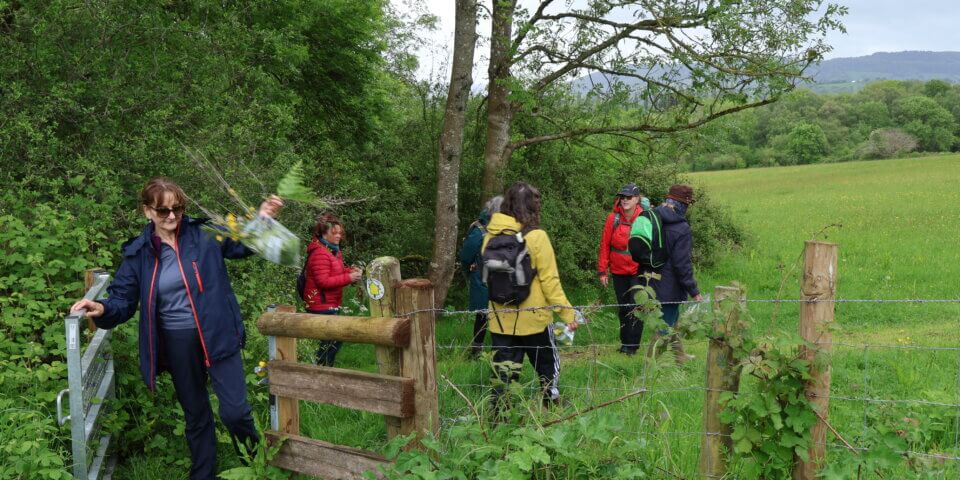
Our Place Golden Valley: Make Your Way Wednesdays
Over the past few weeks, we’ve been walking, looking and making together in the Golden Valley as part…